Do I need a cosmetology license to do bridal makeup on location in my state?
Licensing for makeup artistry, hair services and mobile work is set state by state. Here is how to read your board's rules, and which parts of the job are almost never exempt.
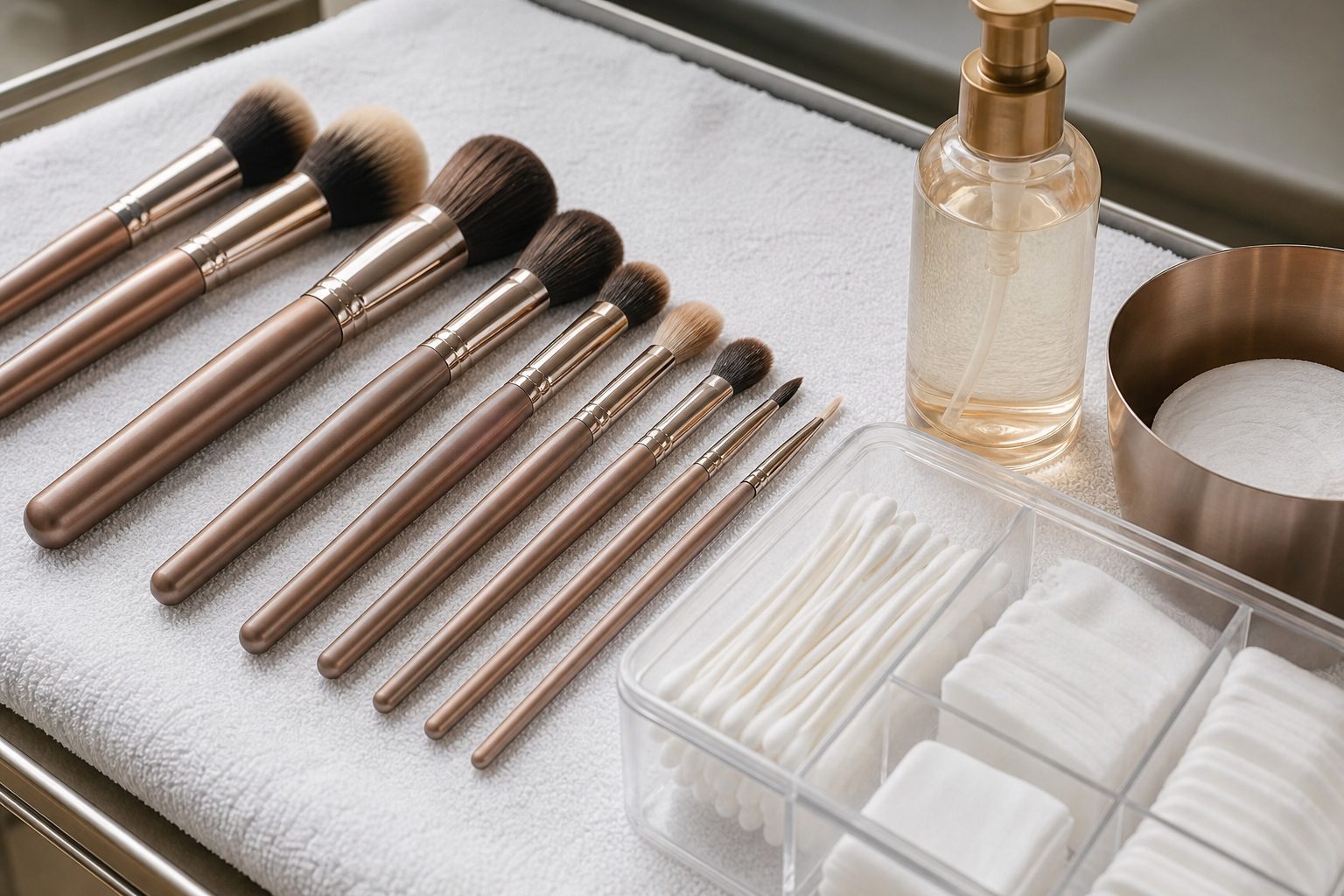
In most states, the honest answer is that it depends on what your hands actually do on the wedding morning. Makeup application alone is the least regulated part of this trade, and a number of state boards do not license makeup artistry as its own practice at all. The moment you pick up a curling iron, a brush and blow dryer, a bobby pin, or a set of individual lash extensions, you are usually in licensed territory, because hair services and lash work are named in almost every state's cosmetology statute.
So the practical rule is this. If you do hair, assume you need a cosmetology license or the state's equivalent hair-specific credential. If you do makeup only, check whether your board licenses makeup under esthetics, licenses it under a limited or specialty permit, or leaves it alone. And if you do both, which most of us do, the stricter requirement governs the whole booking.
There is a second layer that catches people who have already sorted out their personal license: the establishment or salon license, and where the state says services may legally be performed. That is the part that trips up mobile artists, and it is worth understanding before you take another hotel suite booking.
Where cosmetology, esthetics and makeup licensing diverge
State practice acts generally define three overlapping scopes. Cosmetology is the broad one: hair cutting, styling, chemical services, and usually skin and nail work as well. Esthetics is skin: facials, hair removal, and in most states makeup application. Makeup artistry, where it exists as its own credential, is a narrow permit that authorizes cosmetic application and nothing else.
The divergence matters because the training hours behind each are wildly different. A full cosmetology program is commonly measured in the high hundreds to over a thousand clock hours depending on the state. Esthetics programs are typically a fraction of that. A makeup-only permit, in the states that issue one, is smaller again.
Read your own board's practice act, not a school's marketing page. The phrase you are looking for is the definition section, usually near the top of the statute, where the state lists the acts that constitute the practice of cosmetology. If "applying cosmetics" appears in that list, makeup is regulated in your state. If it does not appear anywhere, and no separate makeup permit exists, makeup application is likely outside the board's jurisdiction.
What "outside jurisdiction" does not mean
It does not mean unregulated. You may still owe a local business license, a sales tax permit if your state taxes services or retail products, and general liability coverage that your venues will ask to see. It also does not protect you if you offer one unlicensed hair service as a favor on a morning where you were booked for makeup only.
Keep reading: How do other artists staff a fourteen person bridal party across two getting ready rooms?
Why hair services are treated more strictly than makeup
Boards regulate risk, and hair carries more of it. Thermal tools cause burns. Chemical services cause reactions and hair loss. Shears draw blood. Shared brushes and combs are a documented route for head lice and scalp infection. That risk profile is why hair is written into practice acts across the country while makeup is not always named.
For a bridal artist, this shows up in a specific way. You can often build a legitimate makeup-only business faster than a hair business, but you cannot build a full bridal team that way. The party wants both. So the licensing question is really a business model question: are you subcontracting hair to licensed stylists, or are you carrying that credential yourself?
Both work. What does not work is quietly styling hair without the license because the bride asked nicely at 7:15 and the stylist's car would not start.
How state boards handle mobile and location work
This is the least understood part of the rules. Many state cosmetology acts were written on the assumption that licensed services happen inside a licensed establishment. States have handled the growth of mobile work in three broad ways.
- Explicit permission. The act or the rules name off-site, mobile, or special-event services and set conditions for them.
- A permit or waiver. The board issues a mobile license, a special event permit, or grants approval on request for services outside a licensed shop.
- Silence. Nothing in the rules addresses it, and enforcement practice varies. Silence is not the same as permission, and it is the situation where a phone call or written inquiry to your board is genuinely worth the twenty minutes.
Some states carve out narrow exemptions for services performed where the client cannot travel, such as in a nursing facility or hospital, without extending that to hotel suites and event venues. Read the exemption language literally. A wedding suite is not a medical exemption.
Keep reading: Are couples still booking bridal party services, or is everyone cutting back to the bride?
Salon establishment licenses versus individual licenses
Two separate credentials, two separate fee structures, and artists mix them up constantly.
| Question | Individual license | Establishment license |
|---|---|---|
| What it covers | Your right to perform the service | The premises where services are performed |
| Who holds it | The artist | The owner or operator of the location |
| Renewal | Usually on a set cycle, sometimes with continuing education | Usually annual, tied to inspection |
| Relevance to mobile work | Always required for named services | Depends entirely on whether your state permits off-premises work |
If you run a home studio for trials, that studio may itself require an establishment license, and some states have specific home-salon rules about separate entrances, water supply, and separation from living space. Trials are the service most likely to happen at your own address, so they are the service most likely to raise this question.
Sanitation rules that apply in a hotel room
The board's sanitation rules follow the licensed service, not the address. If you are licensed and performing licensed services, the standards travel with you. Practically, for a wedding morning kit, that means:
- Clean and disinfect, in that order. Wash tools to remove product and debris, then use an EPA-registered disinfectant at the labeled contact time. The contact time is the number people skip, and it is on the label for a reason.
- Separate storage. Clean tools go in a closed, labeled container. Used tools go in a different, clearly separate container. Never back into the clean bag.
- No double dipping. Decant product onto a palette, use disposable applicators for lip and mascara, and sanitize the surface of pressed and cream products between clients.
- Single use where the rule says single use. Anything that cannot be disinfected, including most disposable wands and porous applicators, is thrown away after one client.
- Hand hygiene and a working setup. Bring your own hand sanitizer and a clean towel or barrier for the surface. Hotel bathroom counters are not a sanitized station.
- Refuse service on active infection. Visible open sores, conjunctivitis, or a suspected contagious skin condition is a decline, politely and privately.
Write your own version of that sequence and put it in the kit list your assistants use. If a board inspector ever appears at an event, and it does happen at large venues, you want your setup to look like the rules on the first glance.
See how BrushCallSheet handles this for bridal hair and makeup artistry
Working across state lines for destination weddings
A license is a state credential. Crossing a state line does not carry it with you automatically. Your options, roughly in order of how often bridal artists use them:
- Check for a makeup exemption in the destination state. If that state does not regulate makeup application and you are doing makeup only, the question may resolve itself.
- Reciprocity or endorsement. Many boards license an out-of-state artist whose home training and hours meet or exceed theirs. This is an application with fees and processing time, not a same-week fix.
- A temporary or guest permit. Some states issue short-term authorization for visiting artists working an event. Availability varies a great deal.
- Hire local. Subcontract a licensed local artist for the regulated services and travel as the lead who owns the timeline and the look. For international destinations this is usually the only sane answer, and work permit rules make it more so.
Whichever route you take, build the lead time into your contract. A reciprocity application that takes eight weeks cannot be started six weeks out from a February wedding.
How to verify your own board's current rule
Do this once a year, and once more any time you add a service line. It takes under an hour.
- Find your state board's official site. Search the state name plus "board of cosmetology" and confirm you are on a government domain, not an aggregator.
- Open the practice act and the administrative rules as separate documents. The statute defines scope. The rules define how it is enforced.
- Search the text for the words cosmetics, makeup, mobile, off premises, special event, and exemption. Note the section numbers.
- Check the establishment rules for home-based and mobile facilities.
- If anything is ambiguous, email the board and ask a specific, narrow question. Keep the reply. A dated written answer from the board is the best documentation you can hold.
- Save the whole thing in one folder with the date, and diary a reminder to repeat it next year.
None of this is legal advice, and rules change. It is a research method that puts you in front of the actual language rather than what someone posted in a group.
Getting the compliance work out of your head and into the file
Licensing questions get answered once and then forgotten, which is exactly why they resurface at the worst moment. The artists who stay out of trouble keep credentials, expiry dates, sanitation checklists and subcontractor license copies attached to the same place the wedding lives.
BrushCallSheet holds the trial-to-wedding-day workflow: per person timing, artist assignment, and a shared call sheet the whole party can read. Attach each artist's license details and renewal date to their profile, and the person you assigned to the mother of the bride at 7:40 is also the person you can prove is licensed to be there.
Read also
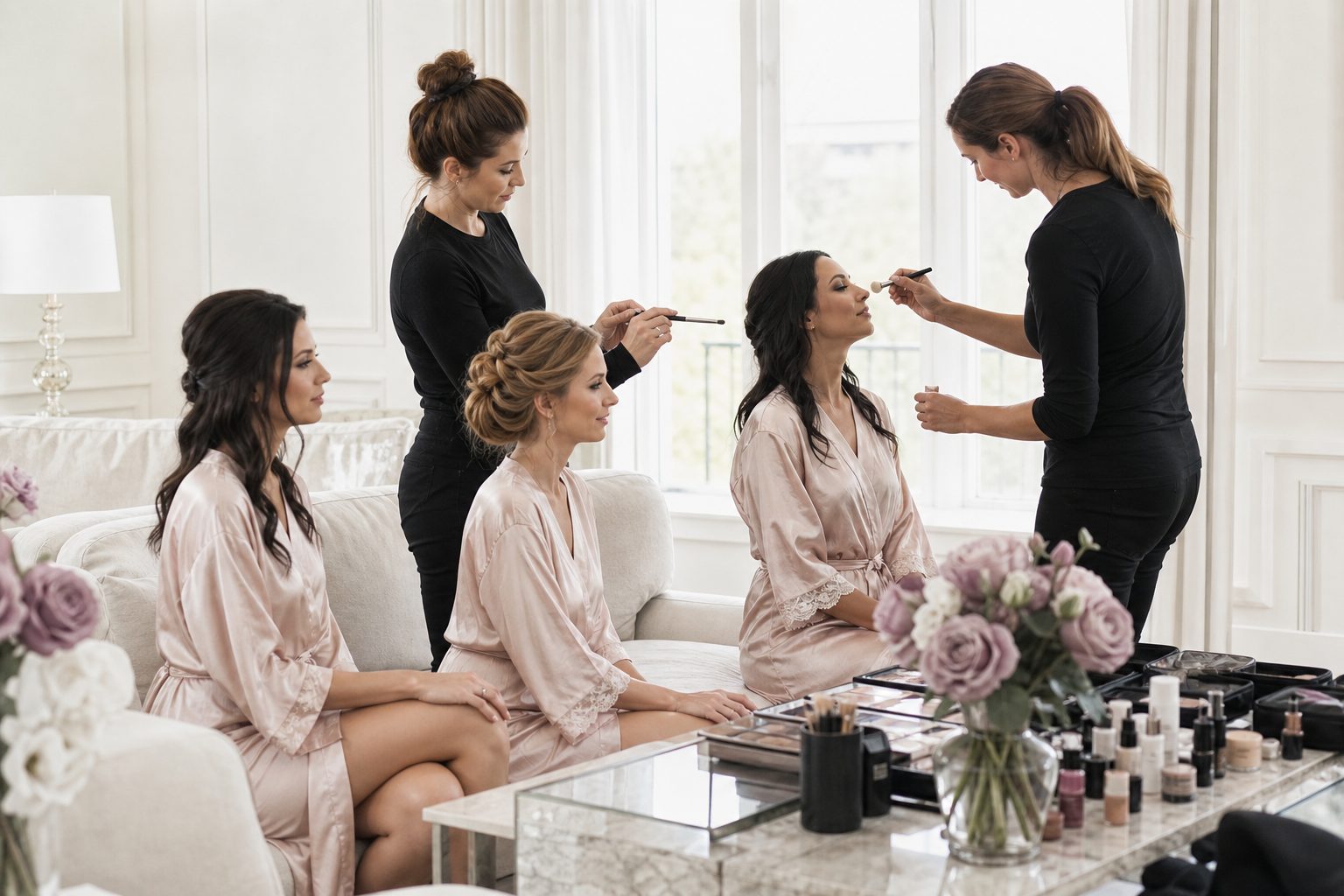
How do other artists staff a fourteen person bridal party across two getting ready rooms?
A detailed walkthrough of how a large split location wedding morning gets staffed, sequenced and run, including the handoffs that keep two rooms on the same clock.
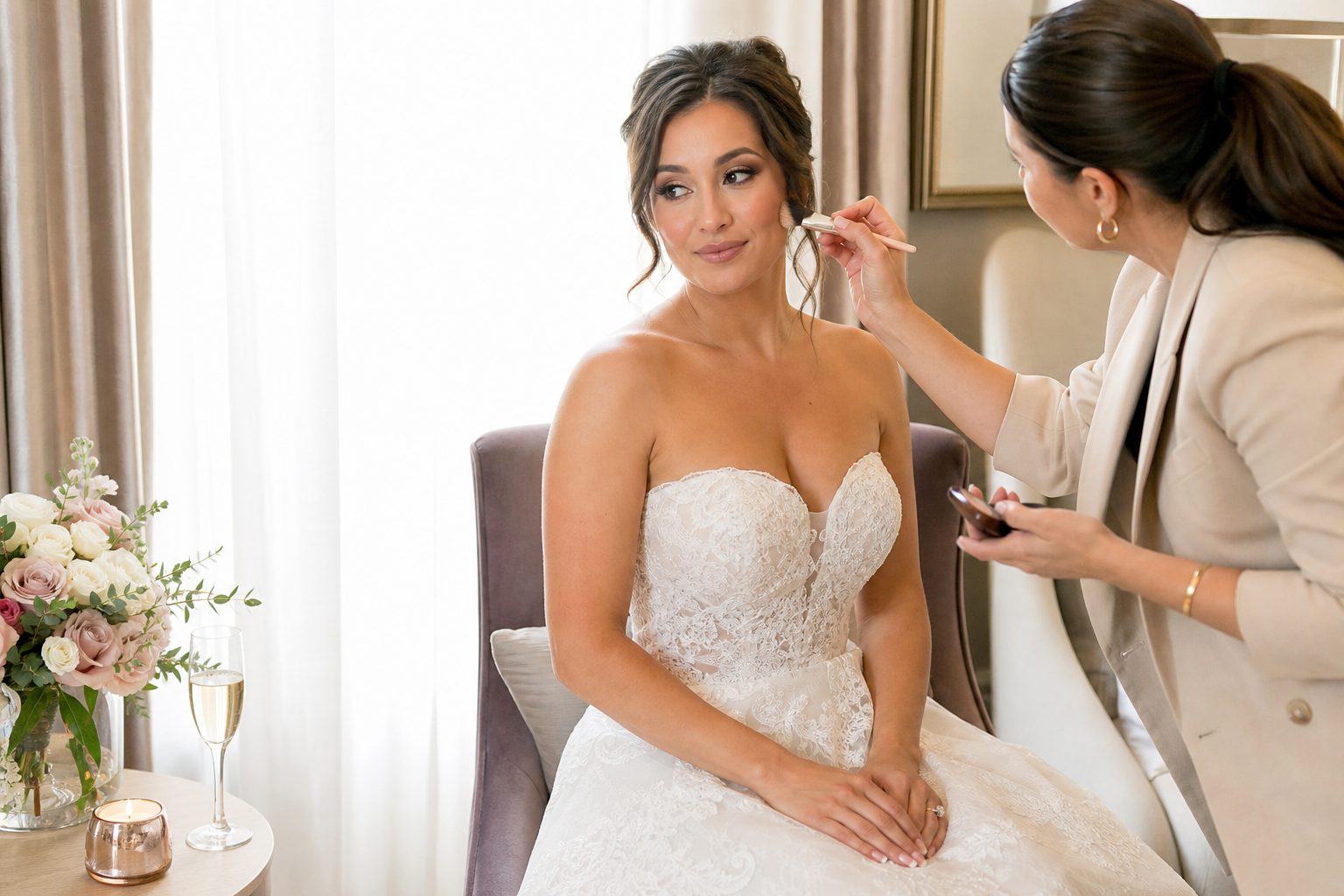
Are couples still booking bridal party services, or is everyone cutting back to the bride?
Party sizes, add on services and booking lead times have shifted since the post pandemic surge. Here is what the change means for how you build packages and minimums.
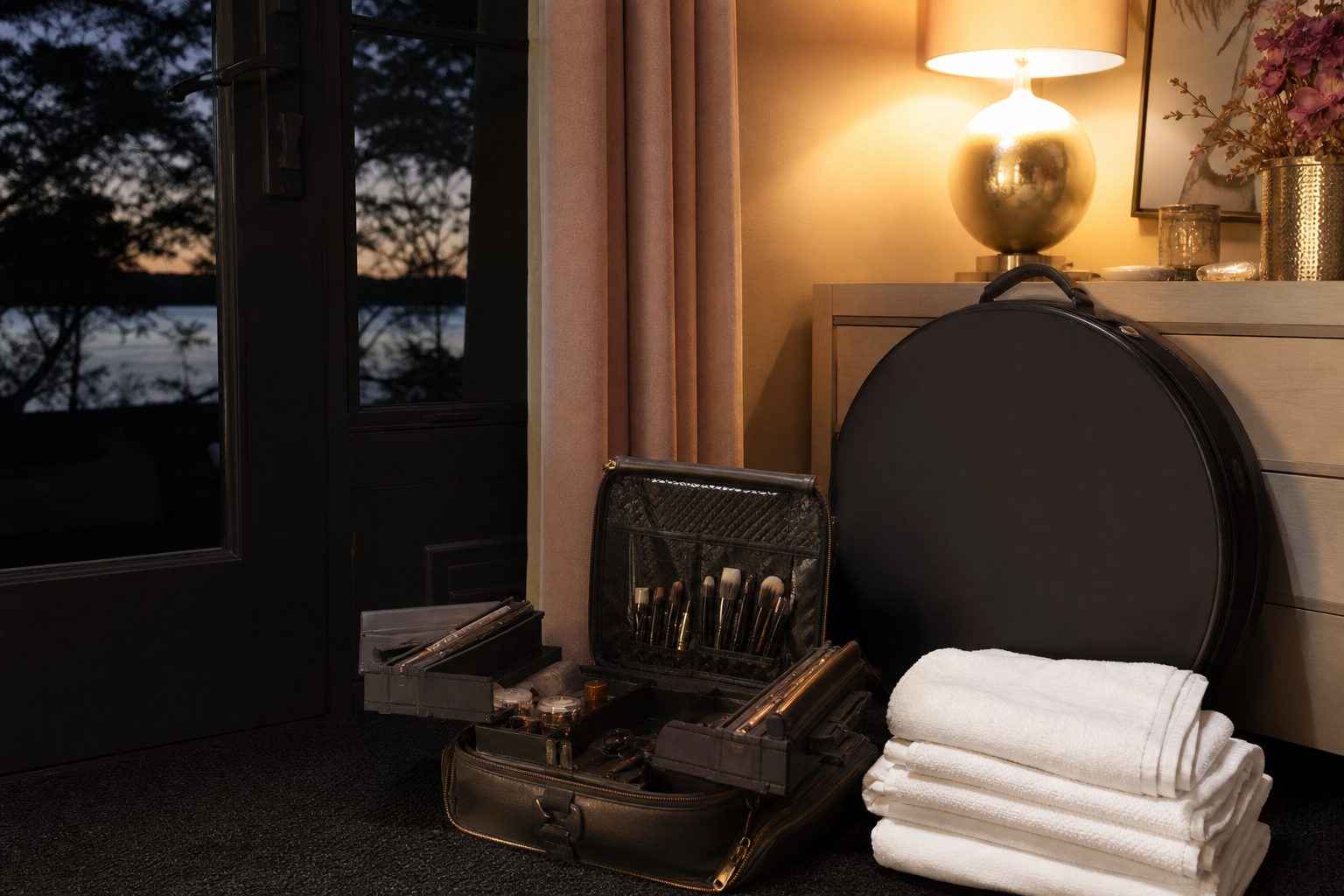
What should be on my kit and prep checklist the night before a wedding day?
A run through of the sanitation, restock, timeline confirmation and travel prep that has to be finished before you sleep, so the morning starts with nothing left to decide.