Are couples still booking bridal party services, or is everyone cutting back to the bride?
Party sizes, add on services and booking lead times have shifted since the post pandemic surge. Here is what the change means for how you build packages and minimums.
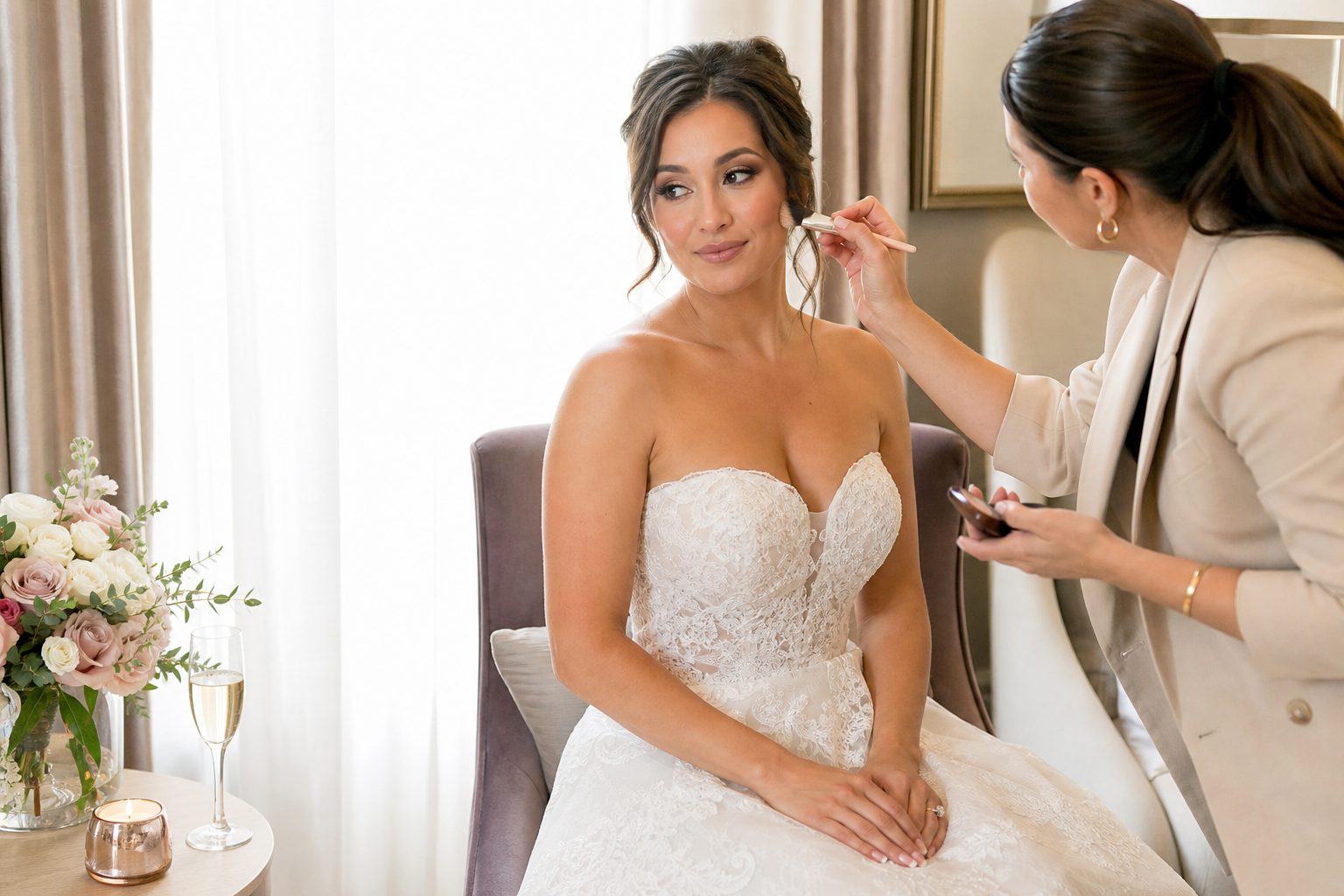
Couples are still booking beauty for the party, but fewer of them are booking it for everyone, and the shape of the average job has changed. The pattern most artists describe is the same one: the very large parties have not disappeared, the middle has thinned, and bride-only bookings that used to be rare now show up regularly enough to need their own price.
That is a description of what artists are seeing, not a measured figure, and you should treat it as a hypothesis to test against your own calendar rather than a fact to plan around. Nobody publishes reliable national data on bridal beauty party sizes. Your own booking records are the only trustworthy source you have.
What is worth doing right now is understanding the mechanisms behind the shift, because they tell you which parts of your pricing are exposed. If your revenue depends on a per-person rate multiplied by a big number, a smaller number hurts. If it depends on a floor you set for the morning, it hurts much less.
What changed in booking lead times
Lead times stretched hard during the rescheduling years, when couples were booking eighteen months and more ahead to secure vendors from a compressed supply. That pressure has eased, and the tail is doing something different from the median.
Two behaviors now coexist. Couples with popular fall Saturdays still book beauty early, often right after the venue and photographer. Couples with weekday, winter or shoulder-season dates book much later, sometimes inside ninety days, because they can see that availability exists.
This matters for cash flow, not just for the calendar. If a meaningful share of your season arrives inside three months, your retainer schedule and your trial calendar both compress. A twelve-month pipeline lets you spread trials across quiet weeknights. A three-month pipeline stacks them.
The practical adjustment
Split your availability view by date desirability, not by month. Hold fewer speculative slots on low-demand dates and stop discounting them preemptively in the spring. If those dates are going to fill late anyway, discounting early just gives away margin you would have earned in September.
Keep reading: What should be on my kit and prep checklist the night before a wedding day?
Smaller parties and the rise of bride only bookings
Two forces push party sizes down. Couples are marrying later, with guest lists and wedding parties that reflect adult friendships spread across cities rather than a hometown cohort. And the cost of everything else at a wedding rose, so the discretionary line items get trimmed.
Beauty for eight bridesmaids is discretionary in a way the venue is not. What often happens is not cancellation but transfer: the couple stops paying for the party and tells the bridesmaids they can book individually if they want to. Some do. Several do not.
The financial consequence is worth working through with actual numbers. Assume you charge 175 dollars per party makeup service and 175 per party hair service.
| Scenario | Services | Revenue at 175 | Artists needed |
|---|---|---|---|
| Full party, both services | 12 | 2,100 | 3 |
| Party trimmed to makeup only | 6 | 1,050 | 2 |
| Bride plus two mothers | 5 | 875 | 1 to 2 |
| Bride only | 2 | 350 | 1 |
Notice that revenue falls faster than staffing does. Going from twelve services to six halves the money but only removes one artist, because you still have a morning, a drive, a setup and a bride. That gap is exactly where minimums exist to live.
Add ons that couples still say yes to
When the party budget shrinks, spend concentrates on the bride and on things that photograph. The add ons artists report holding up best share a trait: they are visible in images or they solve a specific anxiety.
- Strip and cluster lashes as a paid add on rather than an included default. Cheap to stock, quick to apply, visible in every close-up.
- Airbrush or long-wear foundation upgrades, sold on the promise of surviving an outdoor July ceremony rather than on the technology.
- Touch up hours, where an artist stays through first look and formal portraits. This is the add on that most reliably converts, because the fear of a melted face in photos is concrete.
- A second look for the reception, usually a hair change from down to up, sold as part of the same stay.
- Extensions placed and styled, especially when the bride has bought her own and does not know what to do with them.
- Mothers as a bundled pair. Selling both mothers as one line at a slight saving often rescues two services that would otherwise be cut individually.
What sells less well now: generic packages that bundle services the couple cannot picture. Itemize, then let them choose.
Keep reading: How much of my bridal package price is actually left after kit, travel and assistants?
Weekday and off season wedding dates
Friday and Sunday weddings, and increasingly Thursdays, have become normal rather than budget compromises. Venues price them lower, and couples take the saving. For an artist, a weekday wedding is a genuine opportunity and a genuine scheduling problem.
The opportunity is capacity: a Friday booking does not compete with a Saturday booking, so it is incremental revenue on a date you were unlikely to fill. The problem is your assistants, who may have salon shifts or day jobs and are much harder to secure midweek than on a Saturday.
If you take weekday work, lock the team earlier than you would for a Saturday, and expect to pay a little more for it. A Thursday morning with two confirmed assistants is worth more than a Thursday morning at a higher rate with nobody to staff it.
Destination and micro wedding demand
Micro weddings did not stay a pandemic artifact. A thirty-guest wedding with a real photographer and a real dress is now an ordinary choice, and it usually comes with a small beauty booking: bride, one or two attendants, a mother.
Those bookings are dangerous if you price per face and safe if you price the morning. Three services in a private home ninety minutes away can easily be a five-hour commitment for you.
Destination work has a different shape. Couples travelling for the wedding sometimes fly their artist, sometimes hire locally, and the deciding factor is usually the trial. If you have already done a trial and the bride trusts the result, travel becomes justifiable to her. If she has never sat in your chair, she will hire someone near the venue. This is a strong argument for making trials easy to book early, even for couples whose wedding is somewhere else.
See how BrushCallSheet handles this for bridal hair and makeup artistry
How minimums are adapting to smaller counts
The per-person model was built for large parties. With smaller counts, more artists are moving toward a floor plus an itemized list. Three common structures:
- A flat morning minimum. Any wedding morning costs at least X, with services counting toward it. Simple to explain, easy to enforce, and it stops a three-service booking from consuming a Saturday for a small fee.
- A minimum that varies by date. A higher floor on peak Saturdays, a lower one on weekdays and in the off season. This is the structure that best matches how couples are actually booking now.
- A per-artist minimum. Each artist you dispatch carries her own floor. This scales cleanly to large and split-location parties and makes the second room's true cost visible in the quote.
Work your own floor from the bottom up. Take your assistant hourly rate, multiply by realistic hours on site plus travel, add mileage, add parking, add product cost per face, add the hours you will spend on the trial and the timeline. Whatever that total is, your minimum must clear it with margin, or you are buying yourself a job.
What to test in your own booking data
You do not need software analytics for this. You need three seasons of your own contracts and an afternoon.
- For each wedding, record the date, day of week, total services, hair count, makeup count, total revenue, artists dispatched, and days between inquiry and signed contract.
- Calculate revenue per artist-hour, not revenue per wedding. This is the number that tells you whether a booking was worth the Saturday.
- Sort by that figure and look at the bottom fifth. Find what those weddings have in common: distance, party size, day of week, or an add on you undercharged for.
- Compare median party size across the three seasons. If it is falling in your own book, raise the floor before next season opens, not mid-season.
- Check your add on attach rate: what share of brides bought lashes, touch up hours, or a second look. A low rate usually means it was never offered clearly, not that nobody wants it.
Do this once and you will stop arguing about industry trends and start pricing against your own reality.
Where the data comes from next season
The reason most artists never run that analysis is that the information lives in contracts, texts, a spreadsheet and a notebook, and pulling it together takes a weekend nobody has.
BrushCallSheet keeps the whole booking in one structure, from the trial through the wedding morning: every named person, every service, the timing for each, and which artist is assigned. Build the timeline once, and the record of what you actually staffed and charged is already sitting there when you sit down to set next year's minimum.
Read also

What should be on my kit and prep checklist the night before a wedding day?
A run through of the sanitation, restock, timeline confirmation and travel prep that has to be finished before you sleep, so the morning starts with nothing left to decide.

How much of my bridal package price is actually left after kit, travel and assistants?
A cost structure breakdown for a wedding day booking, from product cost per face and mileage to second artist pay, so you can see what your effective hourly rate really is.
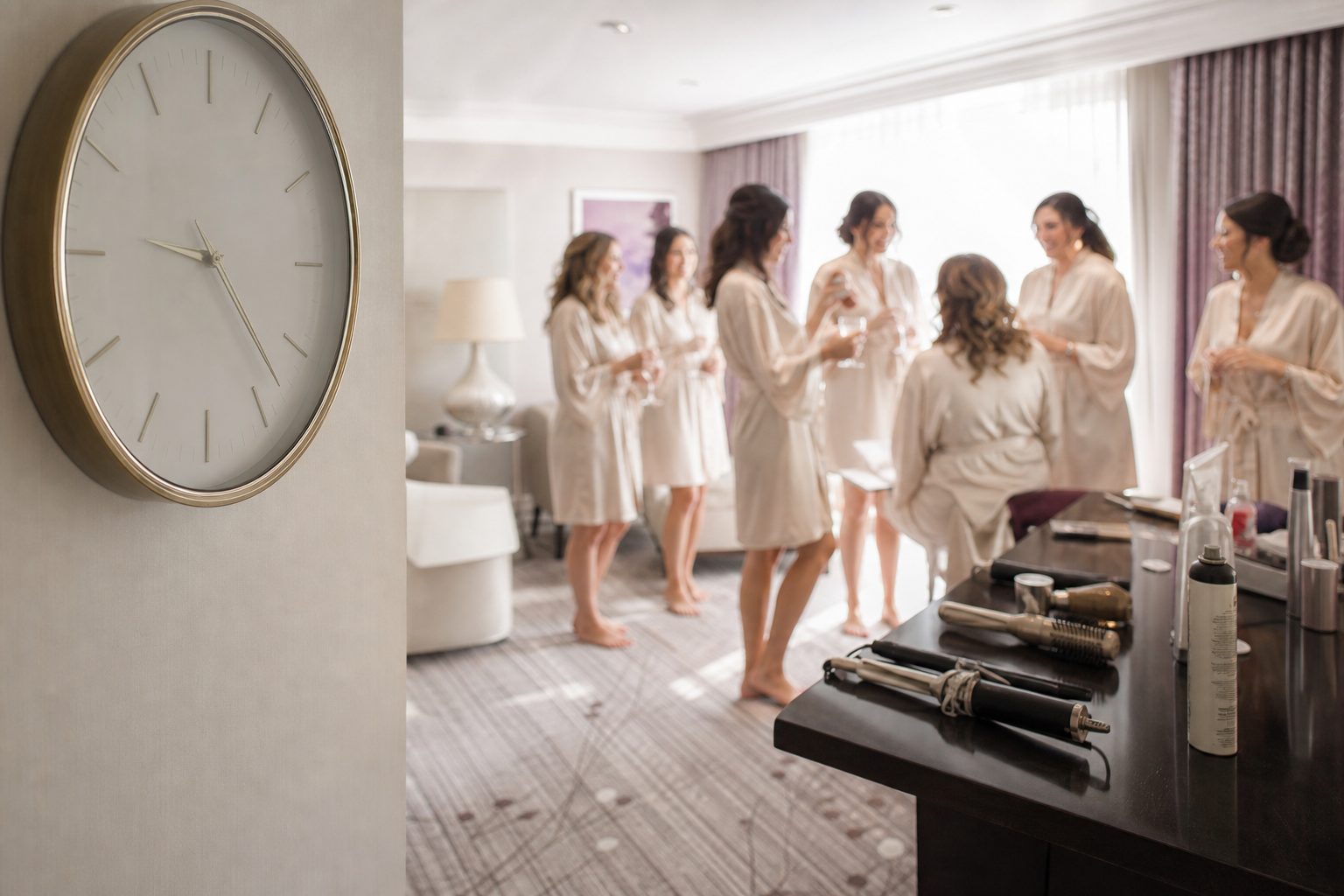
What actually happens when the bride runs forty minutes late on the wedding morning?
An account from inside a delayed getting ready room, tracking how the timeline absorbed the loss, which services were compressed, and what the artist would rebuild differently.