What goes wrong when I book a bridal trial three months before the wedding day?
The trial is where wedding morning timing, product decisions and expectations get set. These are the errors that quietly cost you time and revisions later in the season.
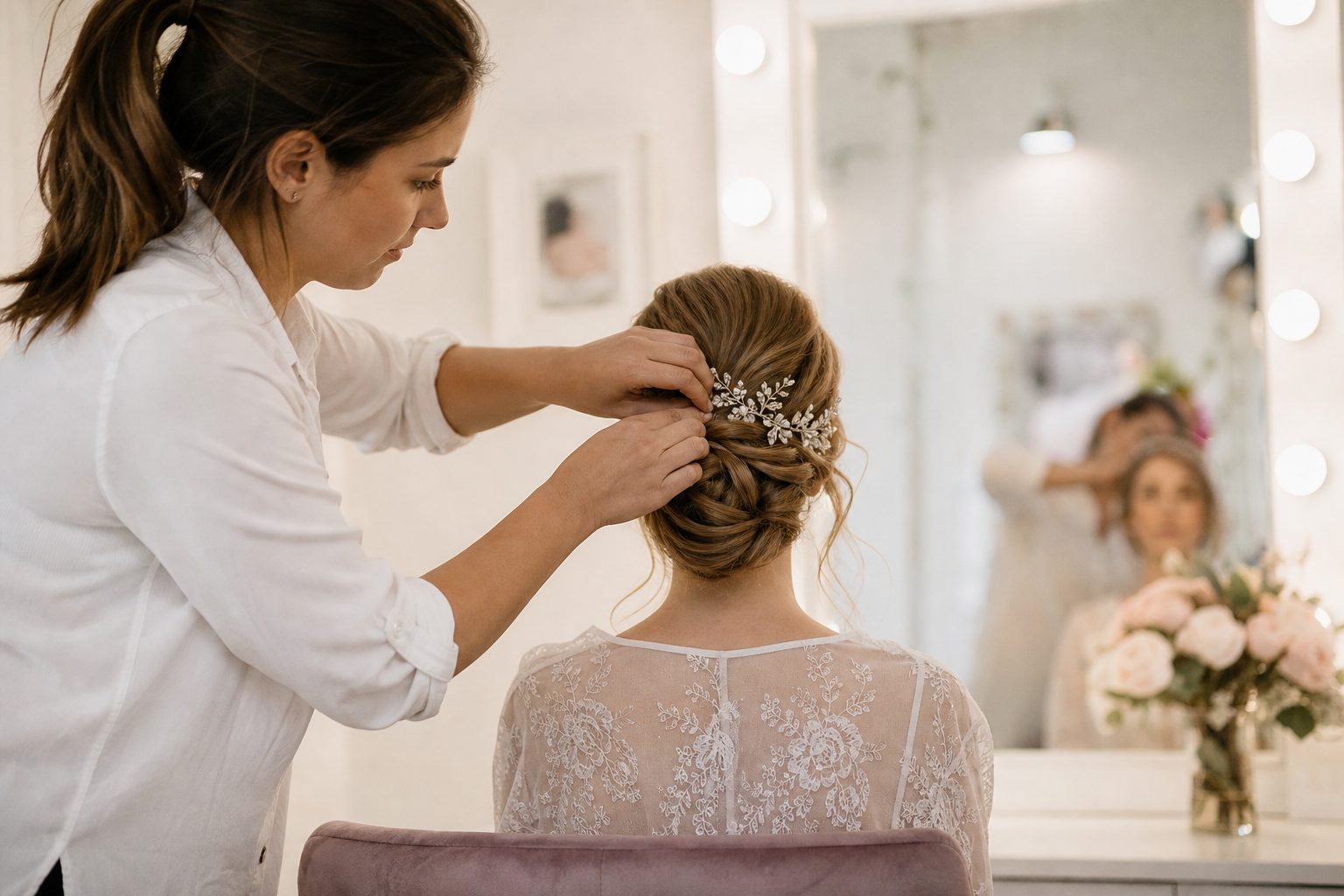
Three months out is a reasonable distance for a trial. What goes wrong at that distance is rarely the look. It is that the trial produces a pretty result and almost no usable information: no measured service time, no product record, no decision, and no notes on how the style behaved with the veil that nobody brought.
Then the wedding morning arrives, you are working from memory and a phone photo taken in a north facing window, and the bride says the words every artist dreads: "it looked different last time."
The errors below are the ones that cost real time and real revisions later in the season. Most of them are fixed by treating the trial as a data collection appointment that happens to produce a beautiful face.
Running the trial without timing the services
A trial is the only controlled sample you will ever get of that specific head of hair and that specific skin. If you do not time it, you have thrown away the one measurement your wedding morning schedule depends on.
Time it properly. Start when your hands touch her, stop when the look is complete and before you photograph it. Log hair and makeup as separate numbers, because on the wedding day they are separate chairs.
Then annotate. Note the things that made this trial longer than the wedding day will be: you tested three lip colors, you rebuilt the crown twice, she arrived with wet hair. Note the things that will make the wedding morning longer: she was alone here, and on the day there will be a photographer, a mother, six people talking, and a room you have never worked in.
Those two adjustments usually cancel out to something close to the raw trial time for hair and slightly under it for makeup. But you can only make that adjustment if you wrote the raw number down.
What to log, minimum
- Hair start and finish, in clock time.
- Makeup start and finish, in clock time.
- Whether extensions were placed by you, and how long that took on its own.
- Lash type and application time.
- Anything you had to redo, and why.
Keep reading: Do I need a cosmetology license to do bridal makeup on location in my state?
Skipping the veil, the dress neckline and the accessories
An updo that looks balanced from the front can be structurally wrong for a veil comb, and you will not discover that until the morning, with a comb in your hand and forty minutes gone.
Ask her to bring three things to the trial: the veil or headpiece, a photo of the dress showing the neckline and the back, and any hair jewelry, combs or pins she plans to wear. If the veil has not arrived yet, ask what type it is. A cathedral length with a heavy comb needs an anchored, dense base. A birdcage sits forward and changes the whole silhouette. A simple single tier fingertip veil is forgiving.
The neckline drives the makeup as much as the hair. A strapless or plunging dress means the decolletage will be in every photograph, which affects whether you are recommending body coverage and how far down you are blending. A high neck changes where the eye goes and often supports a stronger eye.
Practice the veil in and out at the trial. She will remove it after the ceremony, and knowing whether the style survives that is worth more than another five minutes on the lip.
Ignoring how the look reads under photography lighting
Your studio light is flattering and consistent. A wedding day is a bright hotel window at nine in the morning, a dim church, a flash lit reception, and a photographer shooting into the sun at golden hour.
Two practical checks at the trial, both free:
- Flash test. Take a photo with your phone flash on, straight on, close. This is the fastest way to find flashback from a high SPF or a heavily silica based powder in the T zone and under the eyes. If she reads noticeably paler in that photo than in daylight, change the product on those areas.
- Window and shade test. Photograph her in direct window light, then in open shade or a hallway. Blush and contour that look correct in bright light frequently disappear in shade. Depth that looks strong in shade can look muddy in bright light.
Show her both photos. It is a much better conversation than describing the effect, and it moves the discussion from "do you like it" to "does it hold up," which is the question that actually matters.
The same applies to hair. Photograph the back and both sides. Brides evaluate a style in a mirror, from the front, at close range. Guests and cameras see it from behind, from across a room.
Keep reading: How do other artists staff a fourteen person bridal party across two getting ready rooms?
Not recording products, shades and pin placement
Three months is long enough to forget, and if you are running a full season it is long enough to confuse two brides. Worse, if you send a second artist to that wedding, undocumented product decisions are unreproducible.
Build a record at the end of every trial while the products are still on the table. It takes four minutes.
| Category | Record |
|---|---|
| Prep | Cleanser, moisturizer, primer, whether SPF was used and which |
| Base | Foundation brand and exact shade, any custom mix ratio, concealer shade |
| Set | Powder and where it was placed, setting spray |
| Color | Blush, bronzer, every eyeshadow shade in order of placement, liner, lash style |
| Lip | Liner, lipstick, gloss, and whether it was blotted |
| Hair | Iron size and heat setting, sectioning pattern, product order, where the pins anchor, whether extensions were used and their placement |
Photograph the products laid out next to the finished look. Photograph the back of the head. Photograph the pin placement before the final smoothing, because that is the picture that lets someone else rebuild the style.
Also record the negatives. "Does not want a visible lash band." "Hated the first lip, too pink." "Allergic to a coconut derived cleanser." The exclusions save you more time on the morning than the inclusions.
Letting the trial drift without a decision at the end
The single most expensive trial error is ending with "let me think about it and I will text you." That is not a decision, that is a second trial waiting to be booked, usually for free.
Close the appointment properly. In the last ten minutes, sit her down and get three things settled:
- Is this the look, yes or no, with any specific changes named now, in words you can write down. Not "a bit softer." Something like "same base, less depth in the crease, warmer lip, one shade lighter."
- Is the hair the final structure, or is she choosing between two options. If two, pick a primary and note the fallback.
- Confirm the wedding day headcount, the venue and the getting ready location, because they have often changed since she booked.
Then send a written recap within 24 hours: the agreed look, the noted changes, the confirmed count, and the fact that further changes on the wedding morning are limited by the schedule. That recap is your protection. It converts a conversation into a record.
If she genuinely cannot decide, offer a second trial at your standard trial rate rather than an open ended revision. Free revisions train clients to defer decisions, and deferred decisions land on the morning of the wedding.
See how BrushCallSheet handles this for bridal hair and makeup artistry
Booking the trial too far from the wedding date
Six to twelve weeks out is the working window. Earlier than that and too much changes.
What changes between a trial at six months and a wedding day:
- Hair color. Brides frequently do a final color four to eight weeks out, and a shade change can alter which eyeshadow and blush families work.
- Hair length. Growth over six months changes what a style can hold and how long it takes.
- Skin. A skincare course, a new prescription or a treatment plan started for the wedding can shift both her tone and her texture.
- Season. A trial in February and a wedding in August are different skin tones, different humidity, and different longevity demands on the base.
- The dress. Alterations and accessory choices are often not final early on.
If a bride insists on an early trial for scheduling reasons, take it, but flag the color and skin risk in writing and schedule a short check in call at four weeks out to confirm nothing has moved. It is a ten minute call that prevents a forty minute problem.
Charging for the trial in a way that invites revisions
How you price the trial shapes how the client behaves in it. A trial folded into the wedding day package for free feels generous and quietly signals that your time in that chair is not really billable. That is the setup for "could we just try one more thing."
Price it as its own service, at a rate that reflects the time it genuinely takes, which is usually longer than a wedding day application because you are designing rather than executing. Bill it at booking or on the day, separately from the wedding balance.
Then define what the fee buys, in the contract: one appointment, one agreed look, one round of noted adjustments recorded in writing. A second trial is a second fee. State the travel policy too. A trial at the bride's home on a Saturday during peak season has a real cost, and if it is not priced you will be absorbing it eight times a summer.
None of this needs to sound rigid to the client. "The trial fee covers the full design session and the written look record we work from on your wedding morning" is a sentence that explains the value and sets the boundary at the same time.
Where this leaves you
A trial done well produces three assets: a look the bride has agreed to, a product and technique record anyone on your team can execute from, and two timing numbers that become rows on the wedding morning schedule.
BrushCallSheet is built to hold all three in one place, carrying the trial record and the measured timing straight through to a shared call sheet with per person timing and artist assignment. The trial stops being a nice appointment you half remember and starts being the thing the wedding morning is built on.
Read also
Do I need a cosmetology license to do bridal makeup on location in my state?
Licensing for makeup artistry, hair services and mobile work is set state by state. Here is how to read your board's rules, and which parts of the job are almost never exempt.
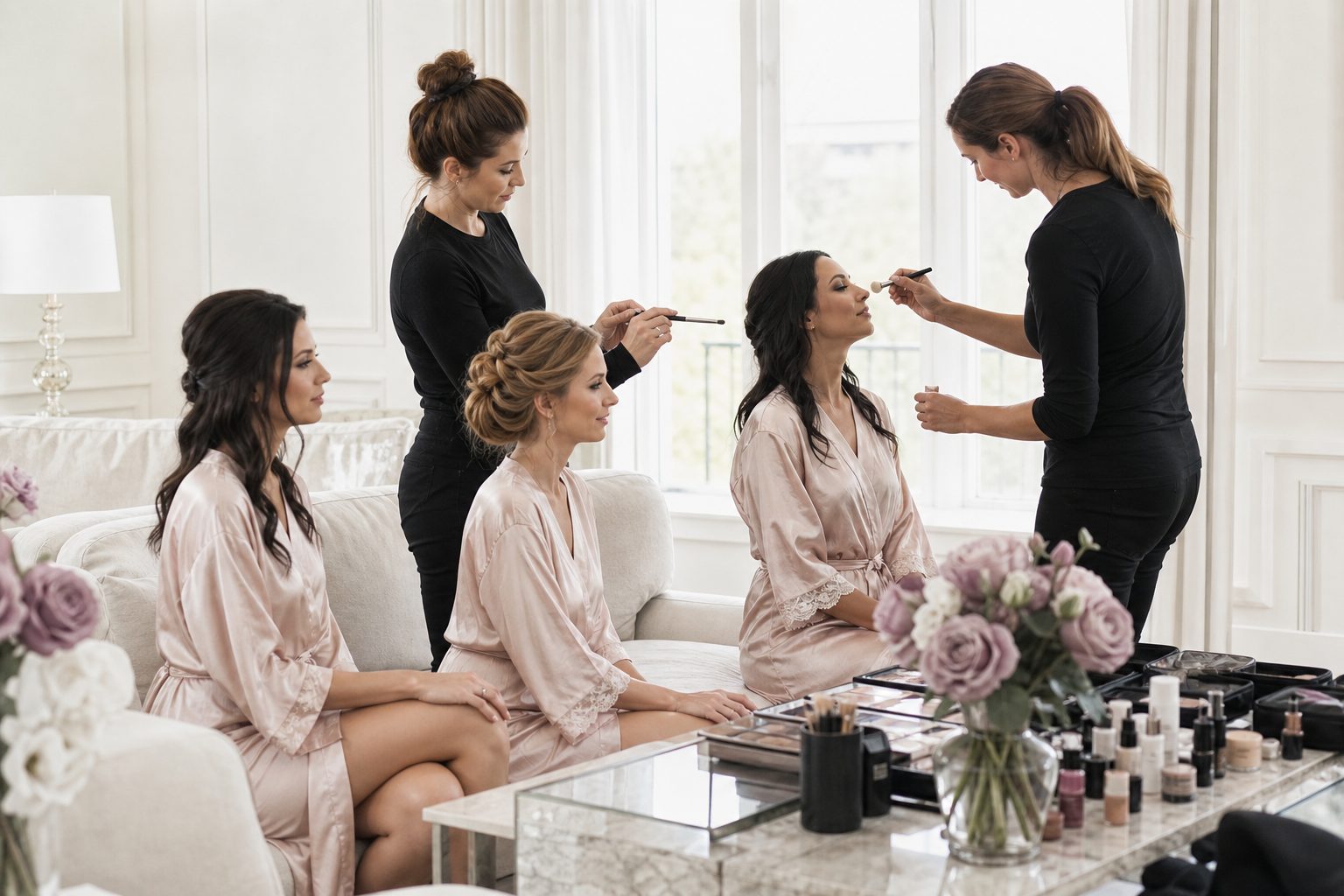
How do other artists staff a fourteen person bridal party across two getting ready rooms?
A detailed walkthrough of how a large split location wedding morning gets staffed, sequenced and run, including the handoffs that keep two rooms on the same clock.
Are couples still booking bridal party services, or is everyone cutting back to the bride?
Party sizes, add on services and booking lead times have shifted since the post pandemic surge. Here is what the change means for how you build packages and minimums.